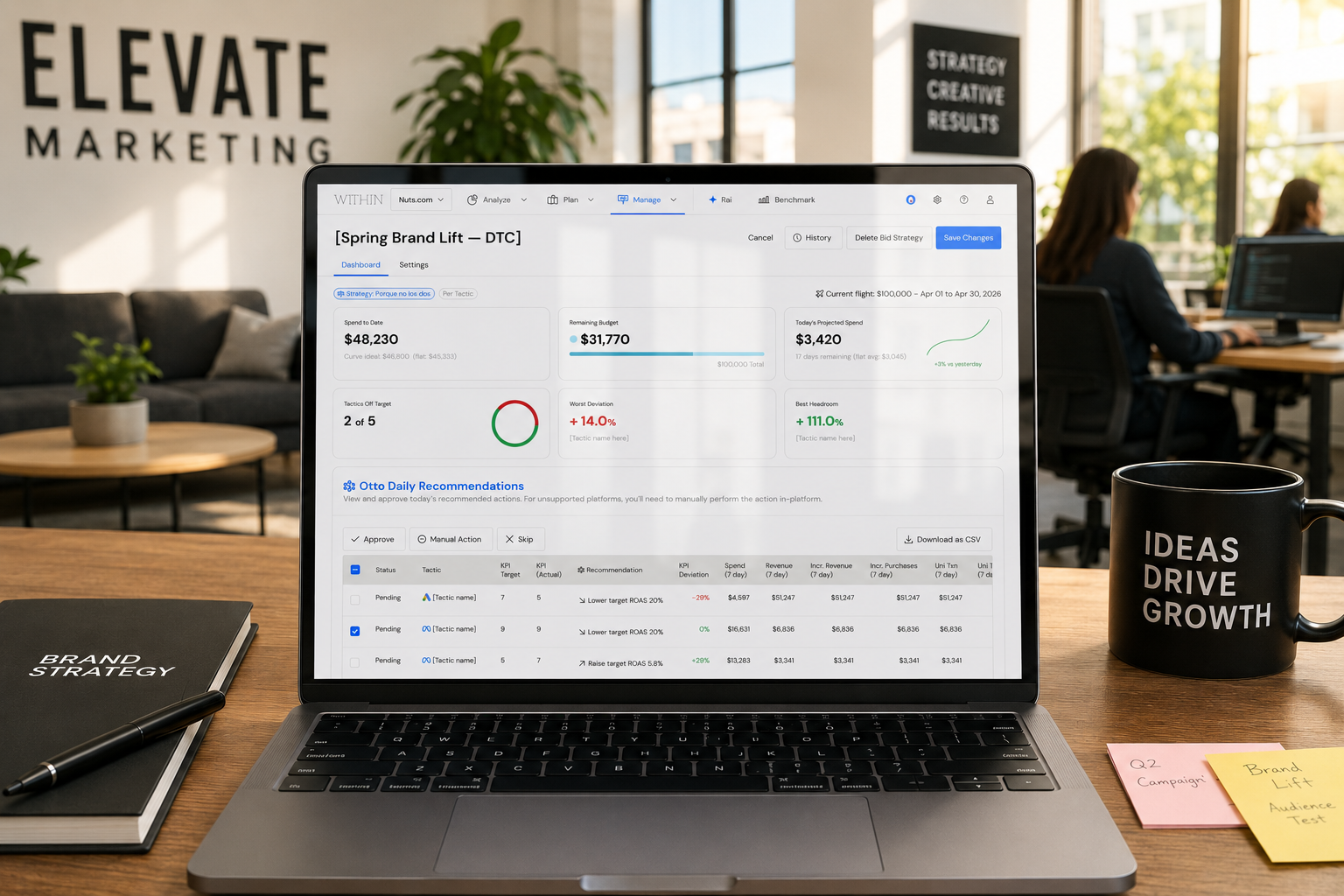
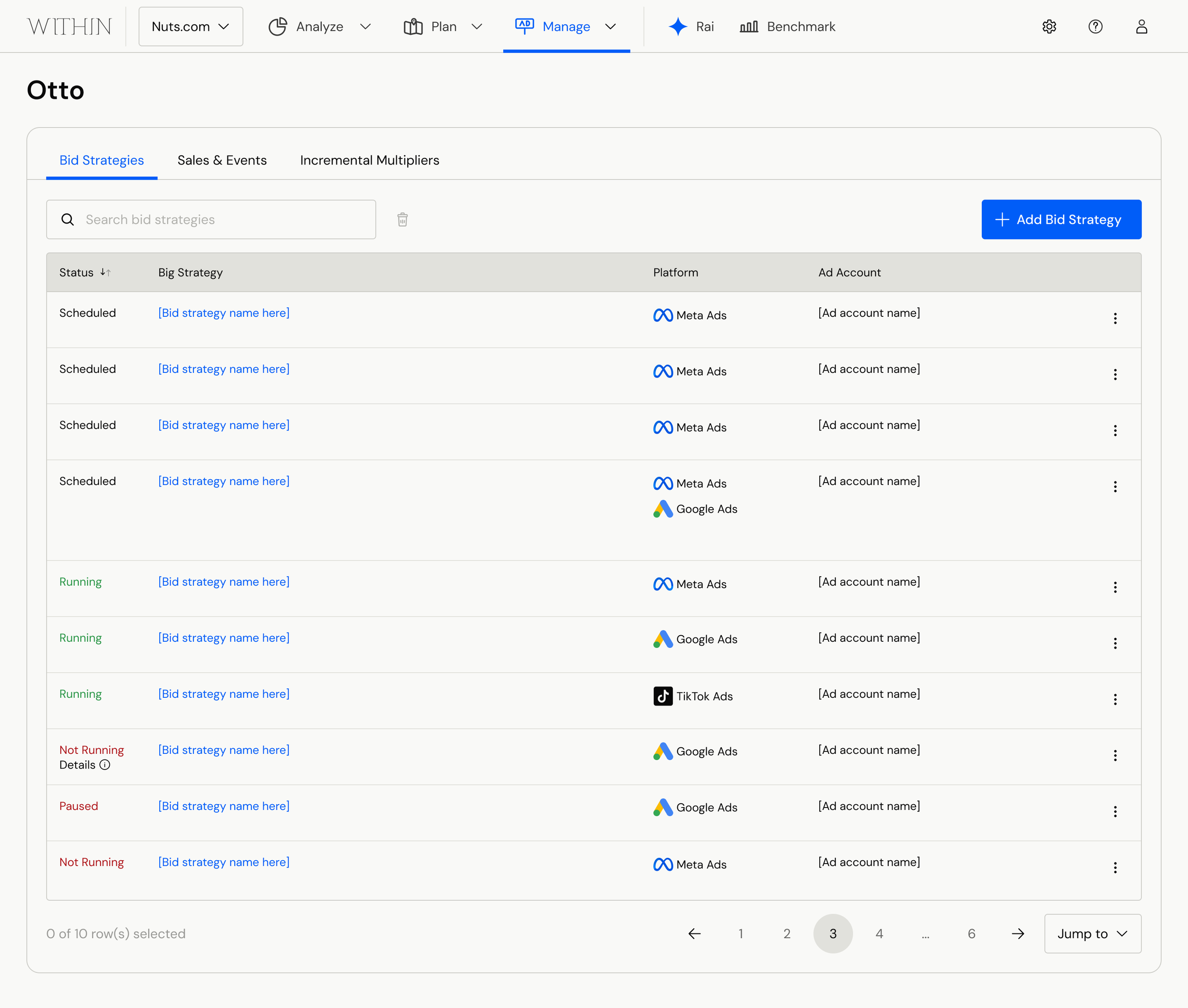
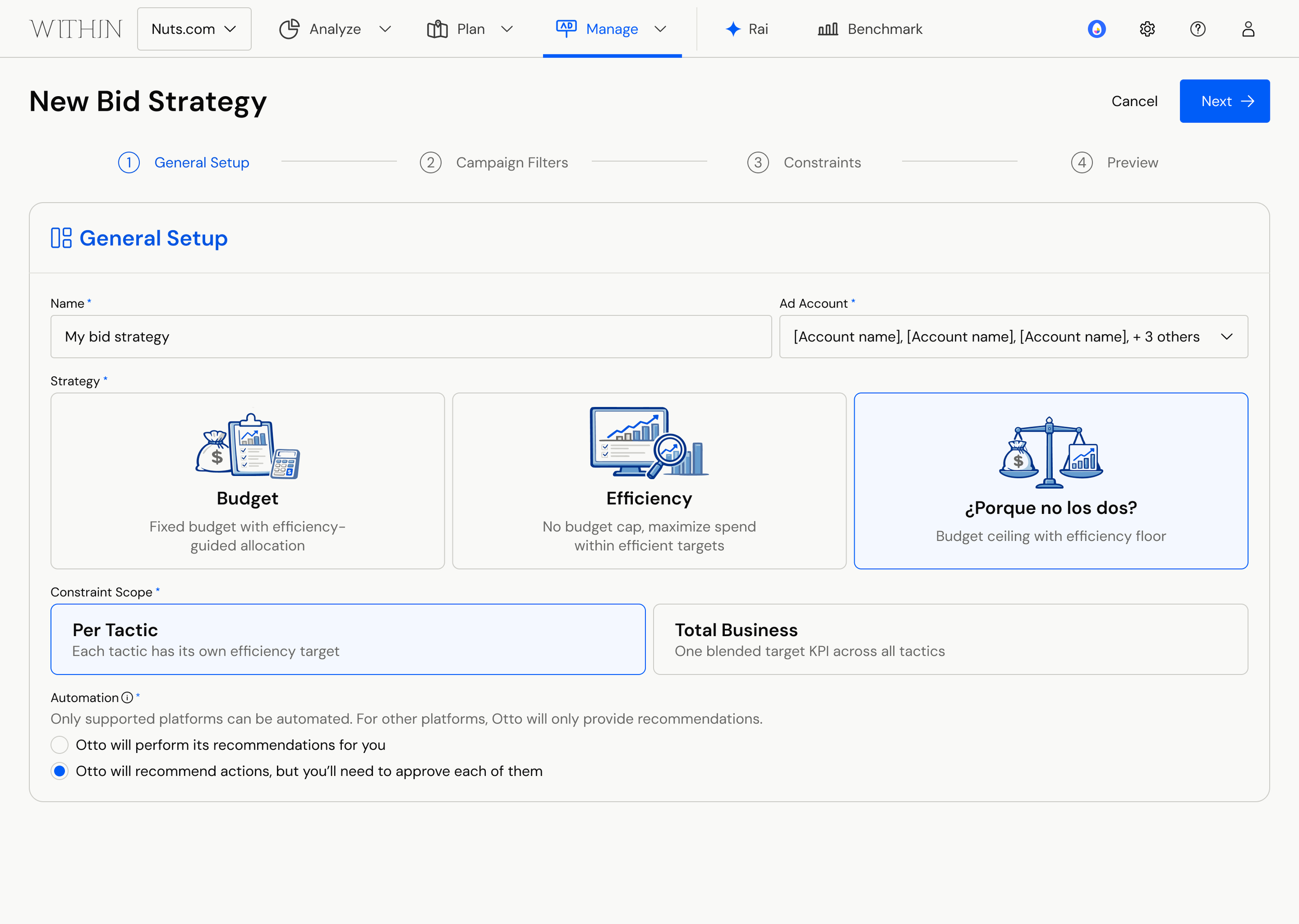
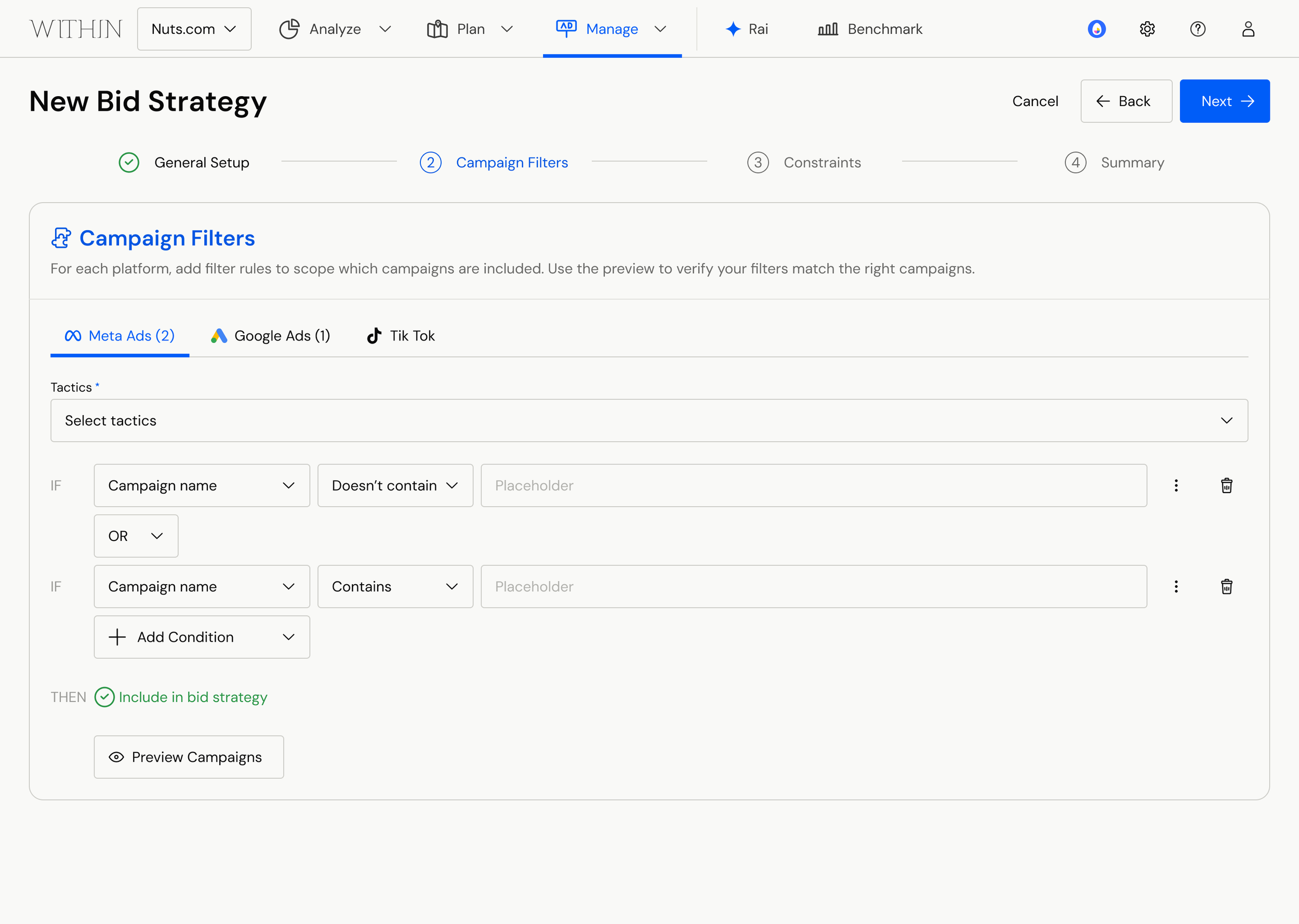
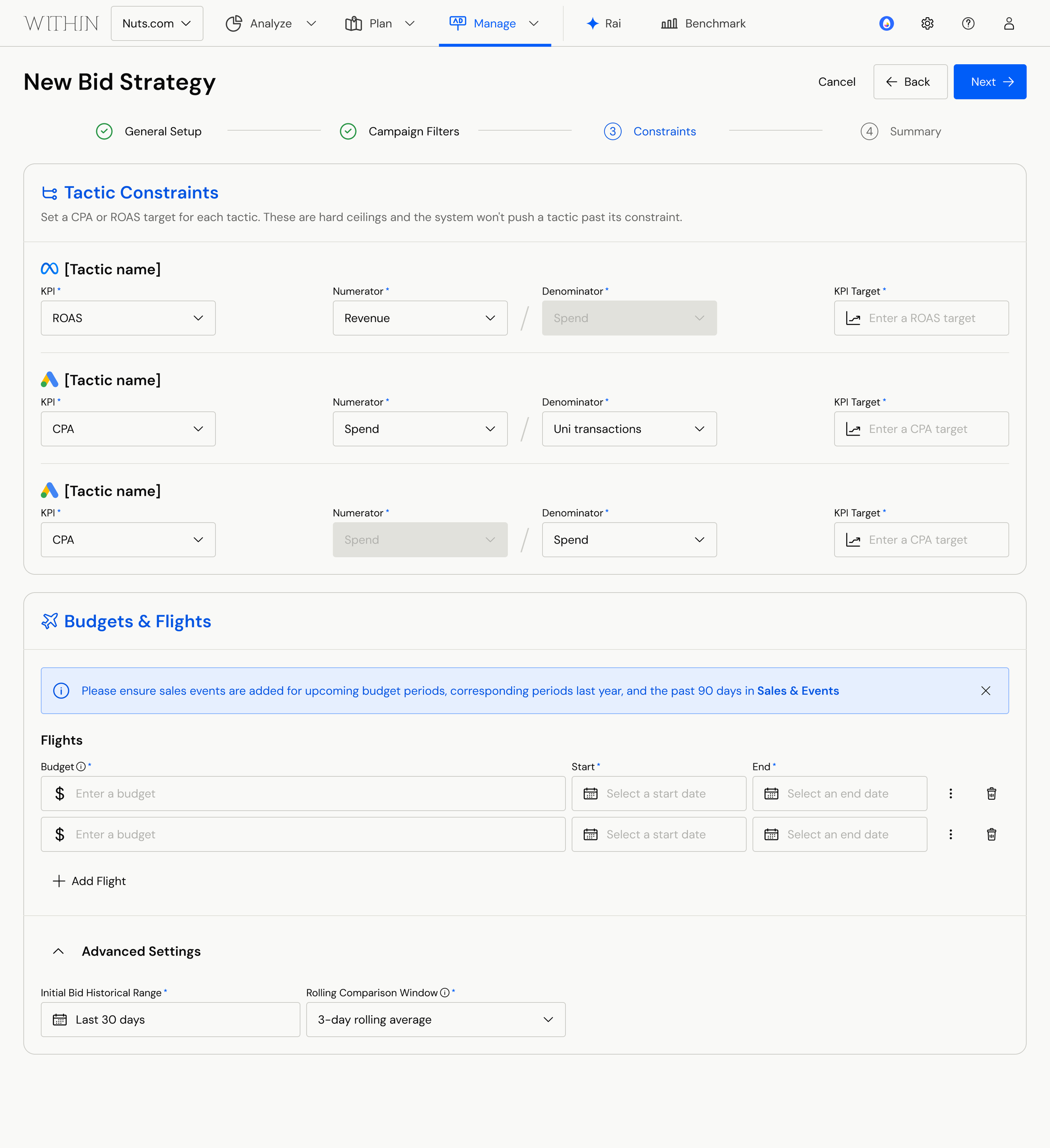
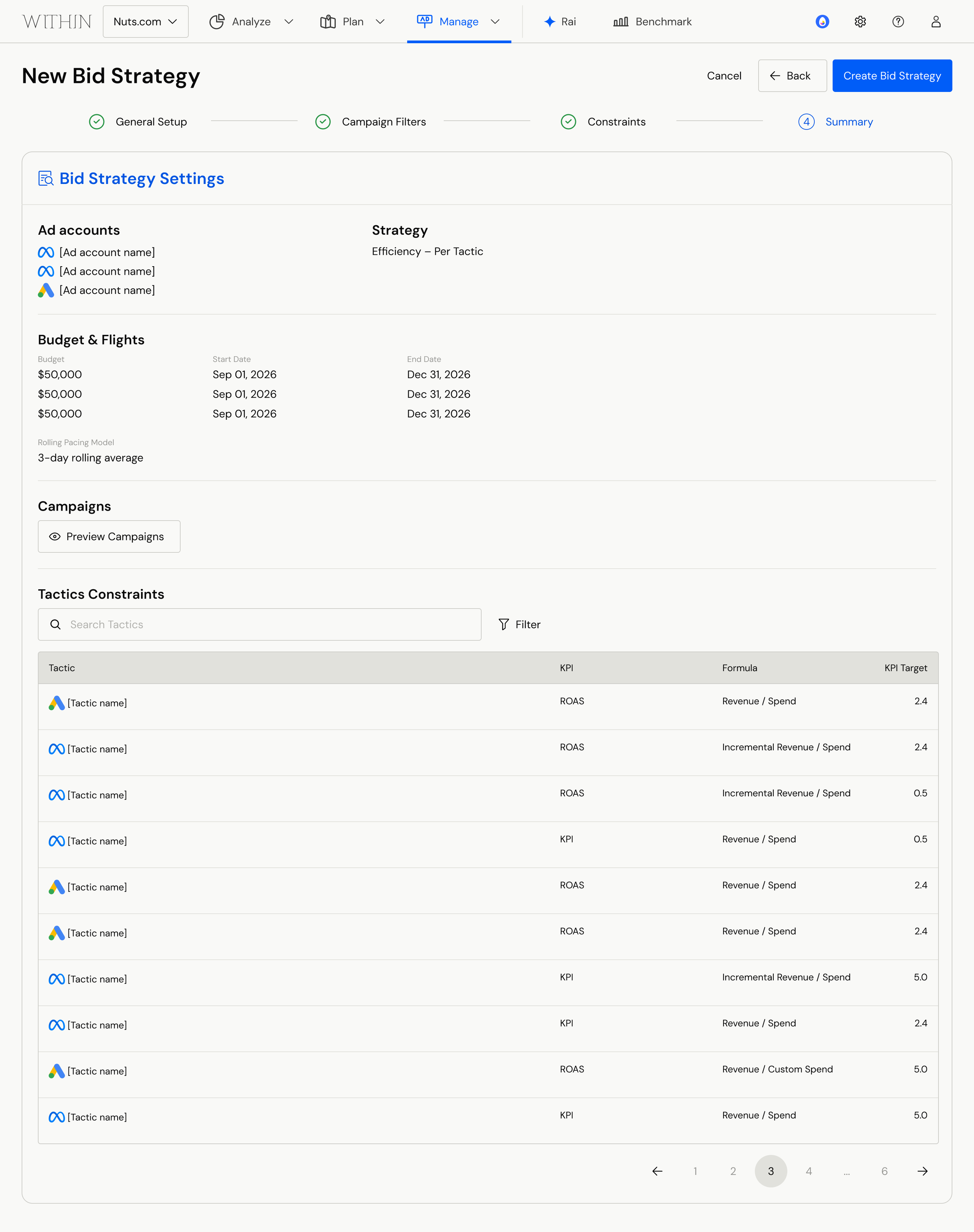
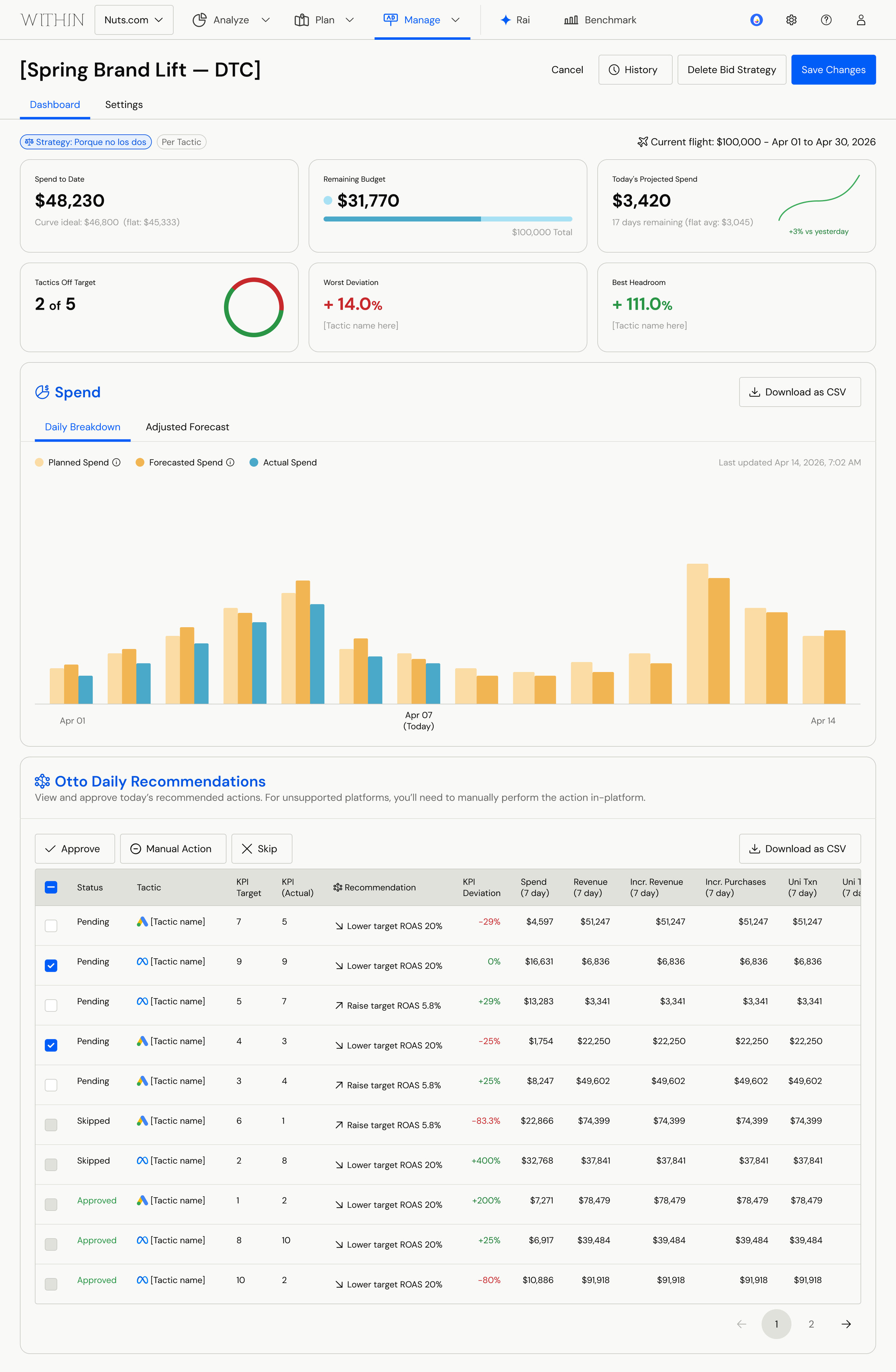
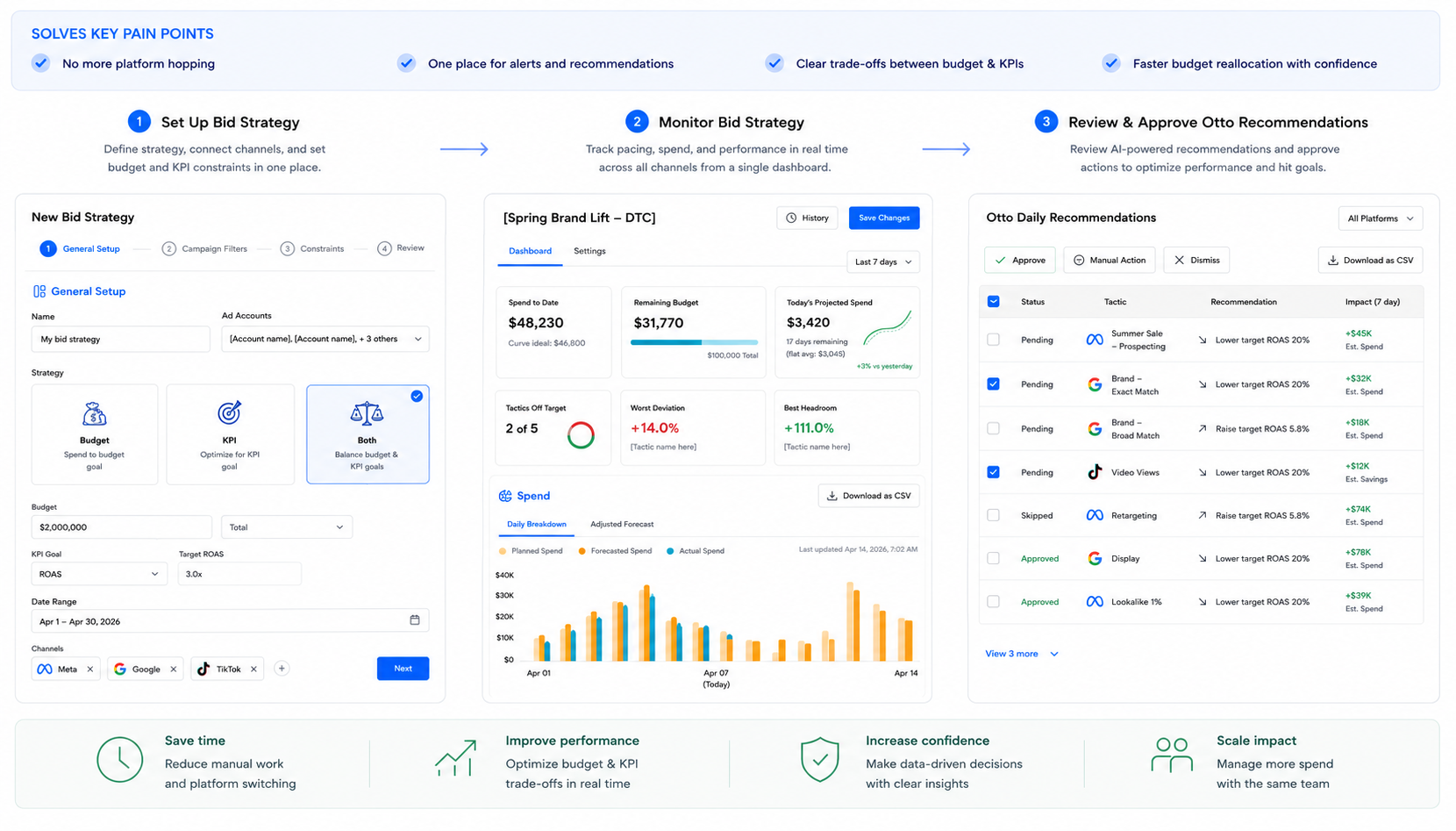

In 2025, I lead the design for Otto, an automated budget pacing tool that helps marketers optimize spend across Meta, Google, and other platforms from a single workflow. I collaborated with Product, Engineering and Machine Learning/Data Science over 5 months to initially deliver this product.
Problem
Marketers need to balance competing business goals across multiple ad platforms. Existing tools were platform-specific, but client budgets aren’t always, saving the agency hundreds of manpower hours.
Users
Performance marketers, digital media buyers, and marketing strategists responsible for managing cross-channel advertising budgets.
Outcome
Enabled marketers to manage hundreds of thousands of dollars in advertising spend through a unified decision-making workflow.
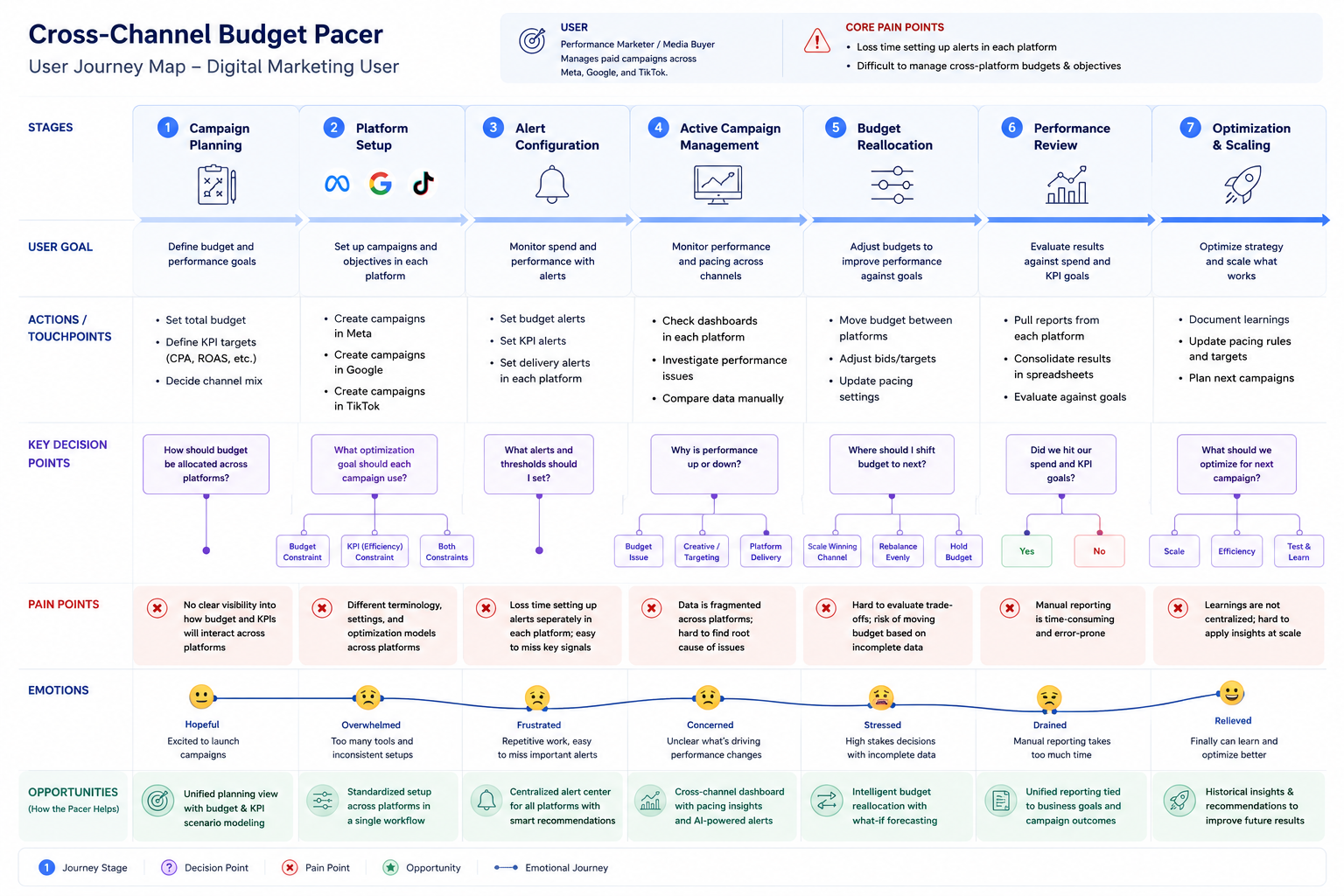
Performance marketers managing campaigns across ad platforms struggle to balance budget utilization and performance goals while working across those platforms for clients. Each platform uses different optimization models, pacing mechanisms, and alerts, forcing marketers to manually monitor performance, configure duplicate alerts, and reconcile data across multiple dashboards. This fragmented workflow makes it difficult to understand trade-offs, respond quickly to performance changes, and confidently allocate budget across channels.
How might we help marketers manage cross-channel budgets and performance objectives from a single workflow while providing clear visibility into the trade-offs between spending efficiency and budget delivery?
Key Research Insights
Cross-platform management is highly fragmented
Marketers and their clients actually tend to allocate budgets based on marketing tactics (Prospecting, Retargeting etc) rather than specific platforms. Campaigns in those platforms are tagged based on the tactic they’re part of.
Budget and performance goals frequently conflict
Users often need to balance competing objectives such as fully spending budget while maintaining efficiency targets like CPA or ROAS. Existing tools provide limited visibility and balance between these.
Reporting requires significant manual effort
Performance data is often exported into spreadsheets to create a unified view of campaign health. Users spend valuable time aggregating and validating data instead of acting on insights.
Users want recommendations, not just data
Marketers are less interested in monitoring individual platform metrics and more interested in understanding what actions they should take. Users consistently expressed a desire for proactive recommendations around budget shifts, pacing risks, and optimization opportunities.
Setup Matters
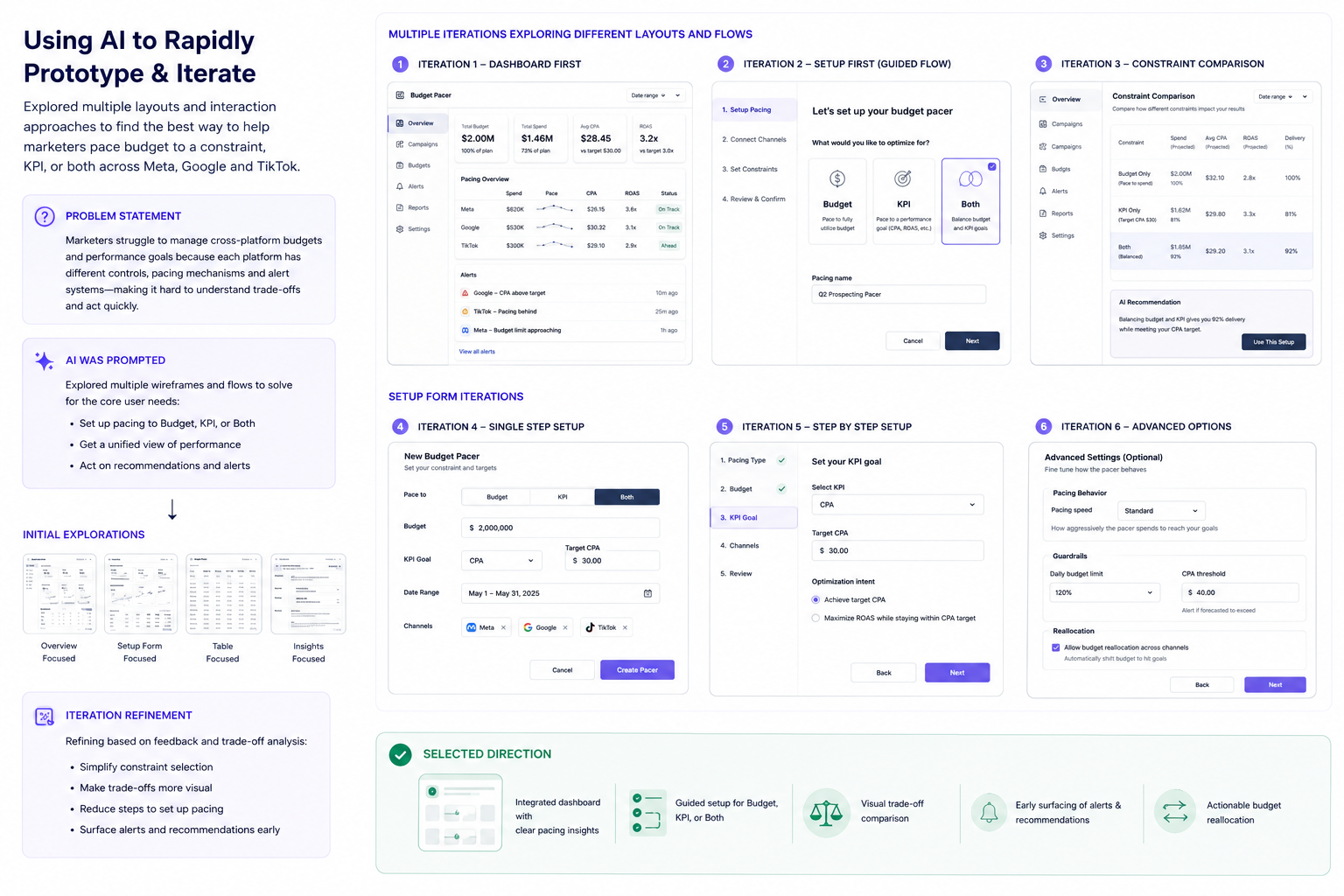
Marketers get budgets and constraints sometimes before they get audiences and other campaign specifics. Budget pacers can therefore be setup before campaigns.
KPIs aren’t standard
Some clients calculate certain KPIs differently such as ROAS (Return on Ad Spend) where they only want a specific portion of their spend to be taken into account. Flexibility for custom KPI formulas was added.
Automation vs Recommendations
Some clients and marketers want a “set it and forget it” model while others want the ability to review & approve individual actions the pacer would take.
The resulting workflow provides a single source of truth for cross-platform budget management. Marketers can define KPI goals & budgets once, monitor spend and performance across platforms in real time, and either automatically action or approve optimization recommendations with clear visibility into expected business impact. By reducing platform hopping, centralizing alerts and recommendations, and making budget-to-KPI trade-offs more transparent, the solution enabled marketers to manage more accounts, and more budget with greater efficiency and confidence.