



Starting Dec 2022, I led the design of a new inventory management experience for Amazon DSP, focused on helping ad buyers more effectively discover, evaluate, and activate programmatic inventory.
The project addressed critical gaps in the ad buying workflow where fragmented tools, poor transparency, and complex deal processes slowed down decision-making and led to frequent activation errors. This was the culmination of 2 years’ worth of various UX and engineering efforts.
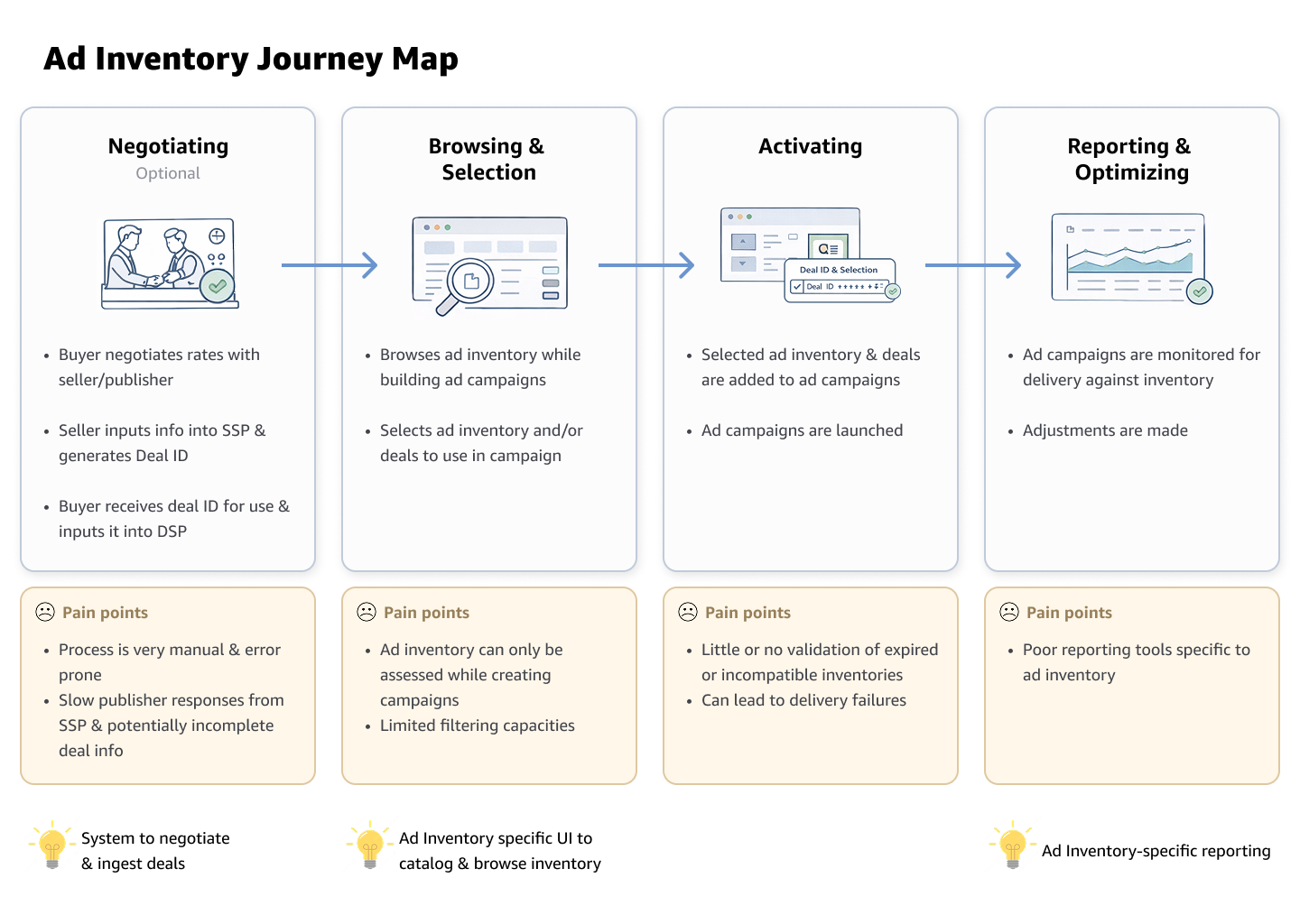
Ad buyers lack a centralized, reliable way to discover, evaluate, and activate inventory, leading to inefficient workflows, frequent errors, and reduced confidence in programmatic buying decisions.
Key Research Insights
Discovery is inefficient
Buyers struggle to compare inventory due to poor filtering and inconsistent metadata.
Deal workflows are fragmented
Negotiation and validation happen outside the DSP, creating context switching.
Validation happens too late
Deal errors are only surfaced during activation, causing failures.
Low trust in inventory quality
Buyers rely on heuristics instead of platform signals.
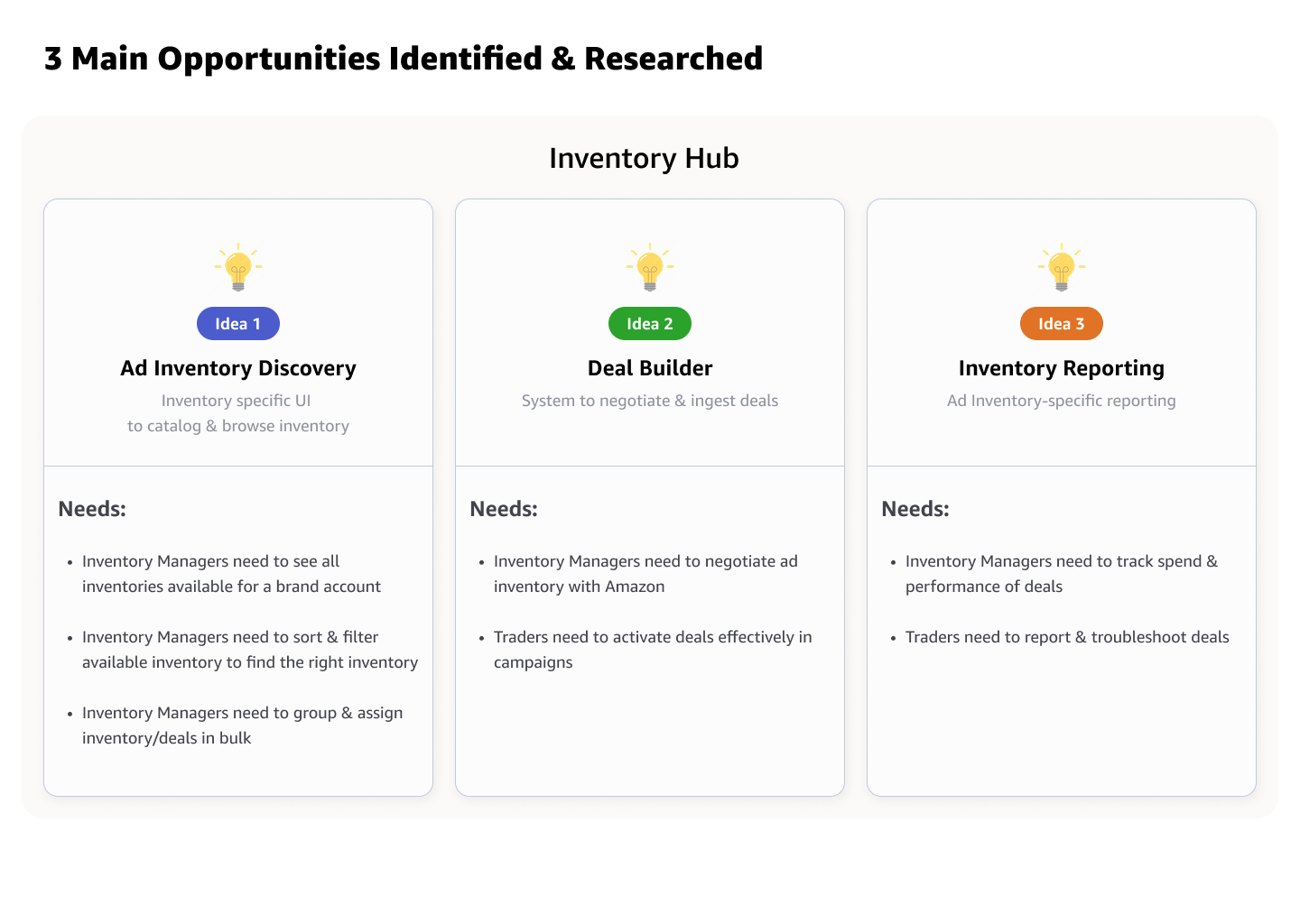
1. Make inventory comparable to enable faster decisions
2. Reduce fragmentation to unify workflows
3. Increase transparency to build user confidence
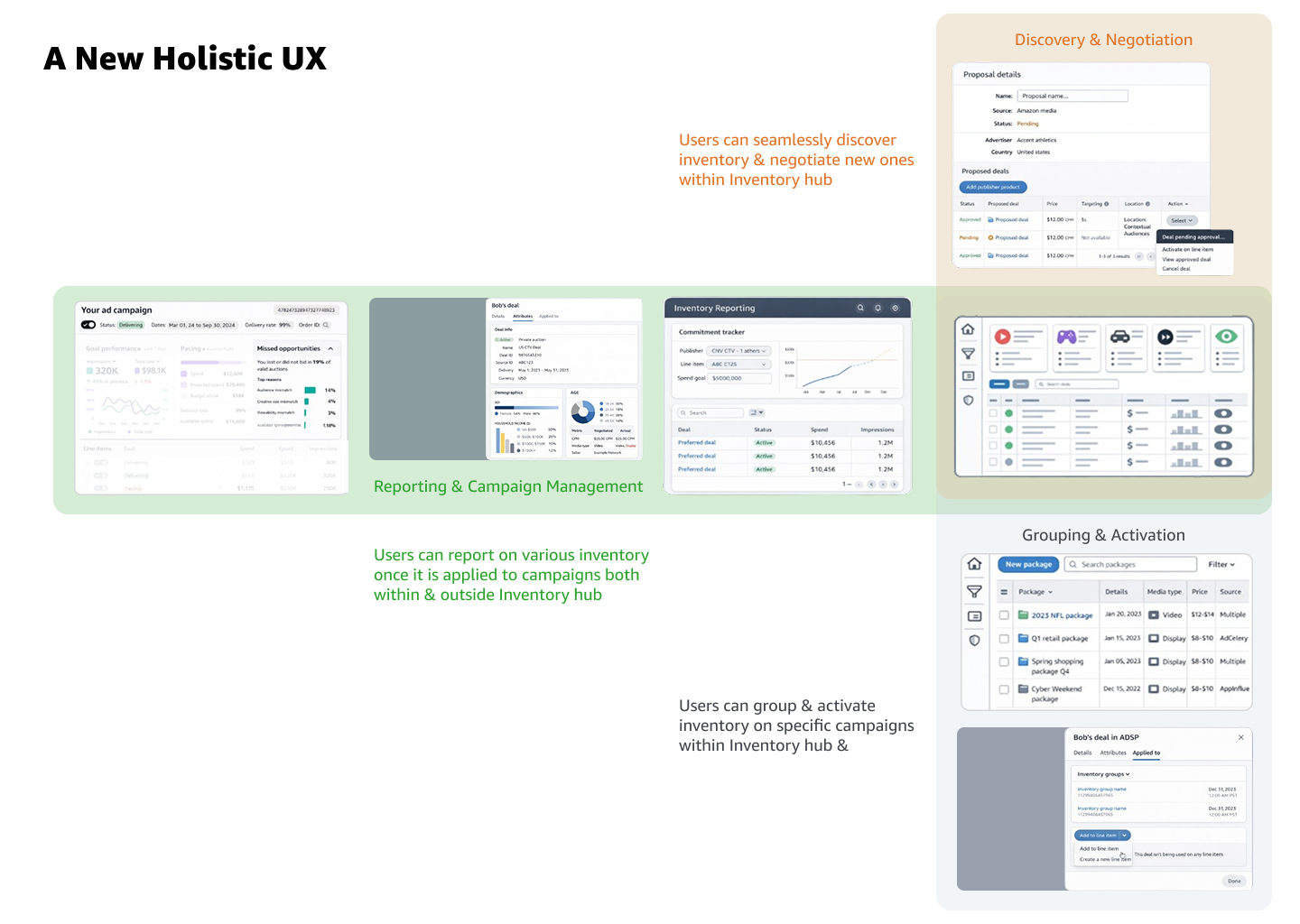
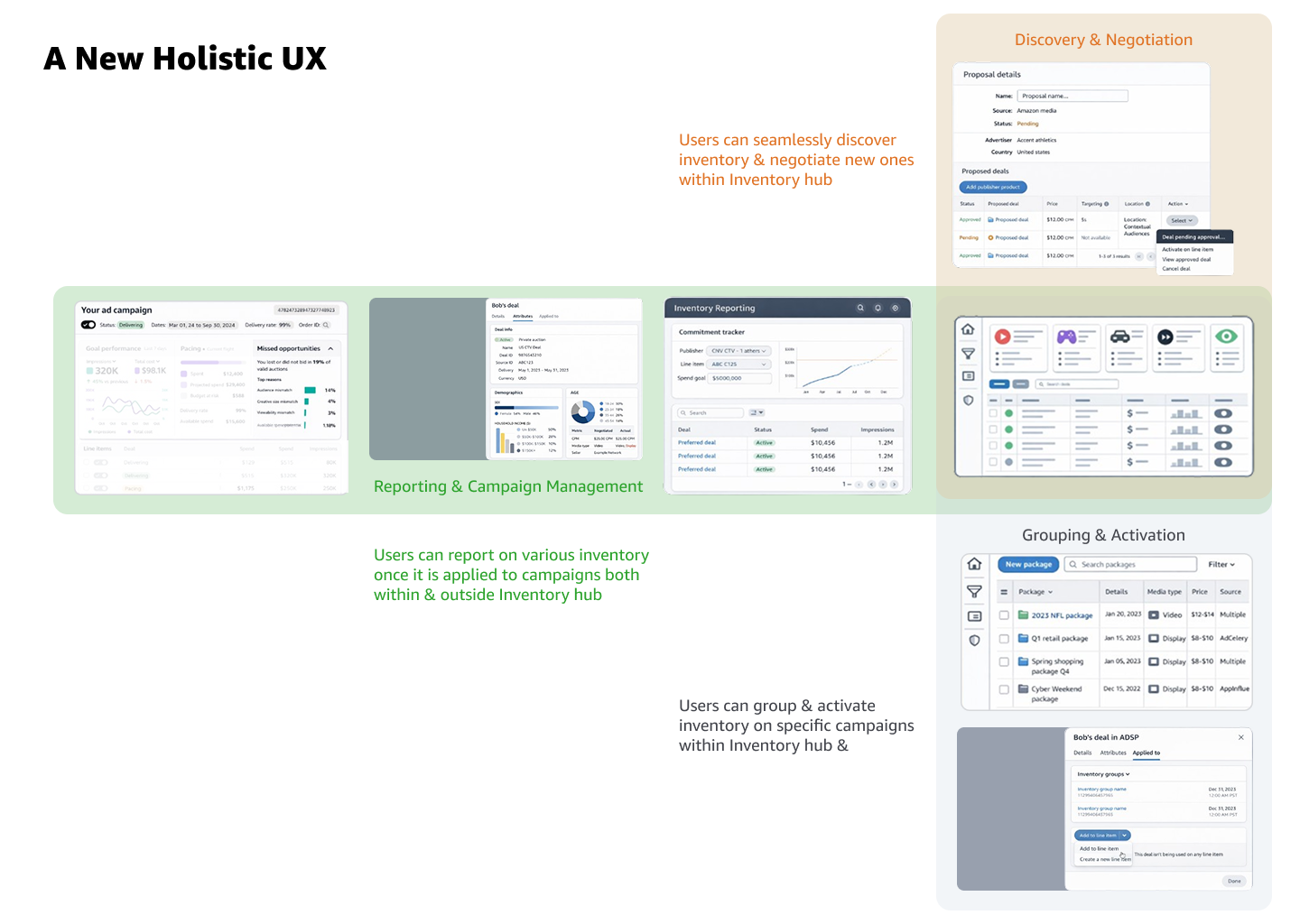
The proposed workflow centralizes a lot of the existing workflows around a new application called Inventory hub, with sub-sections and different experiences for discovery, management, reporting, and troubleshooting.
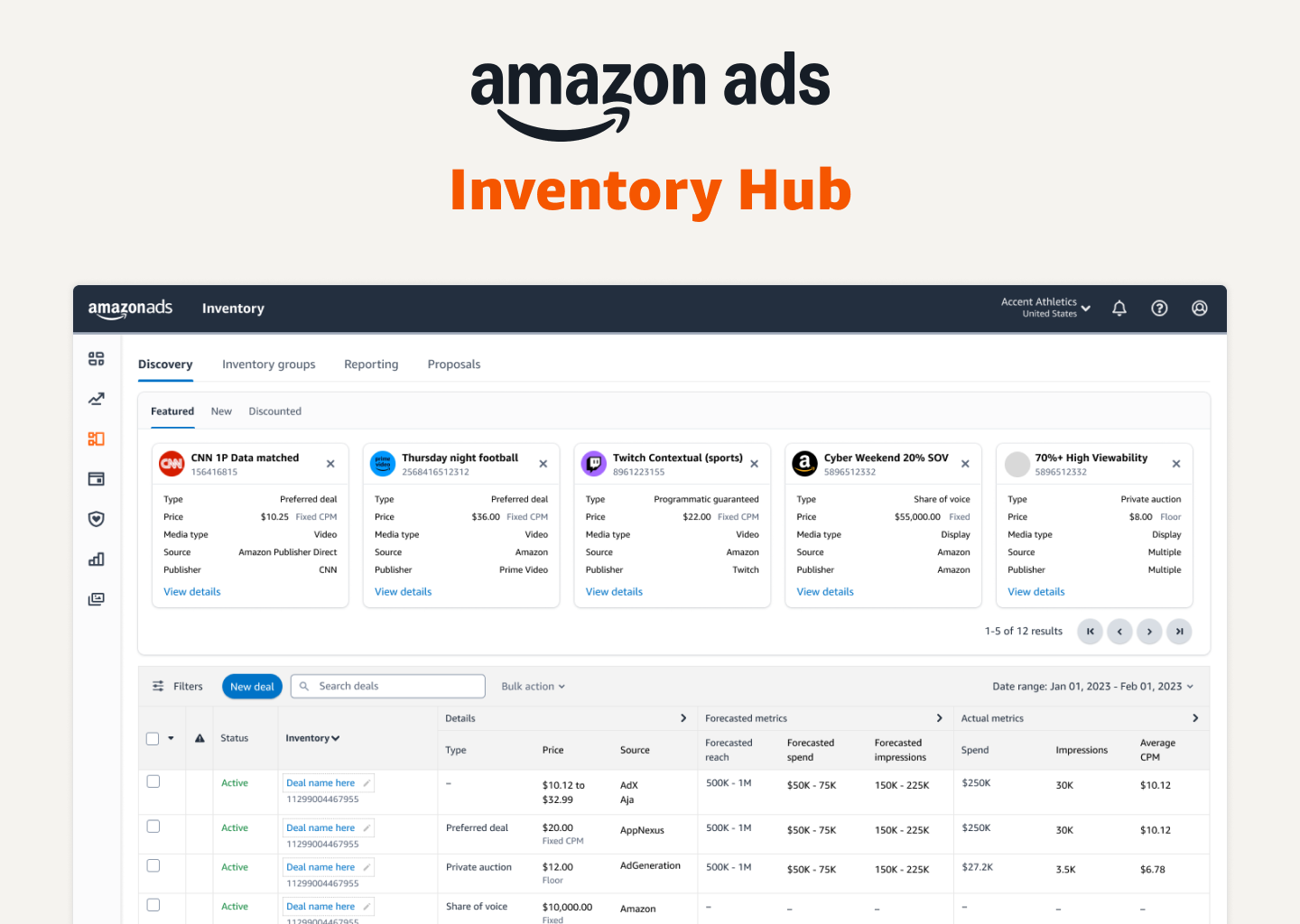
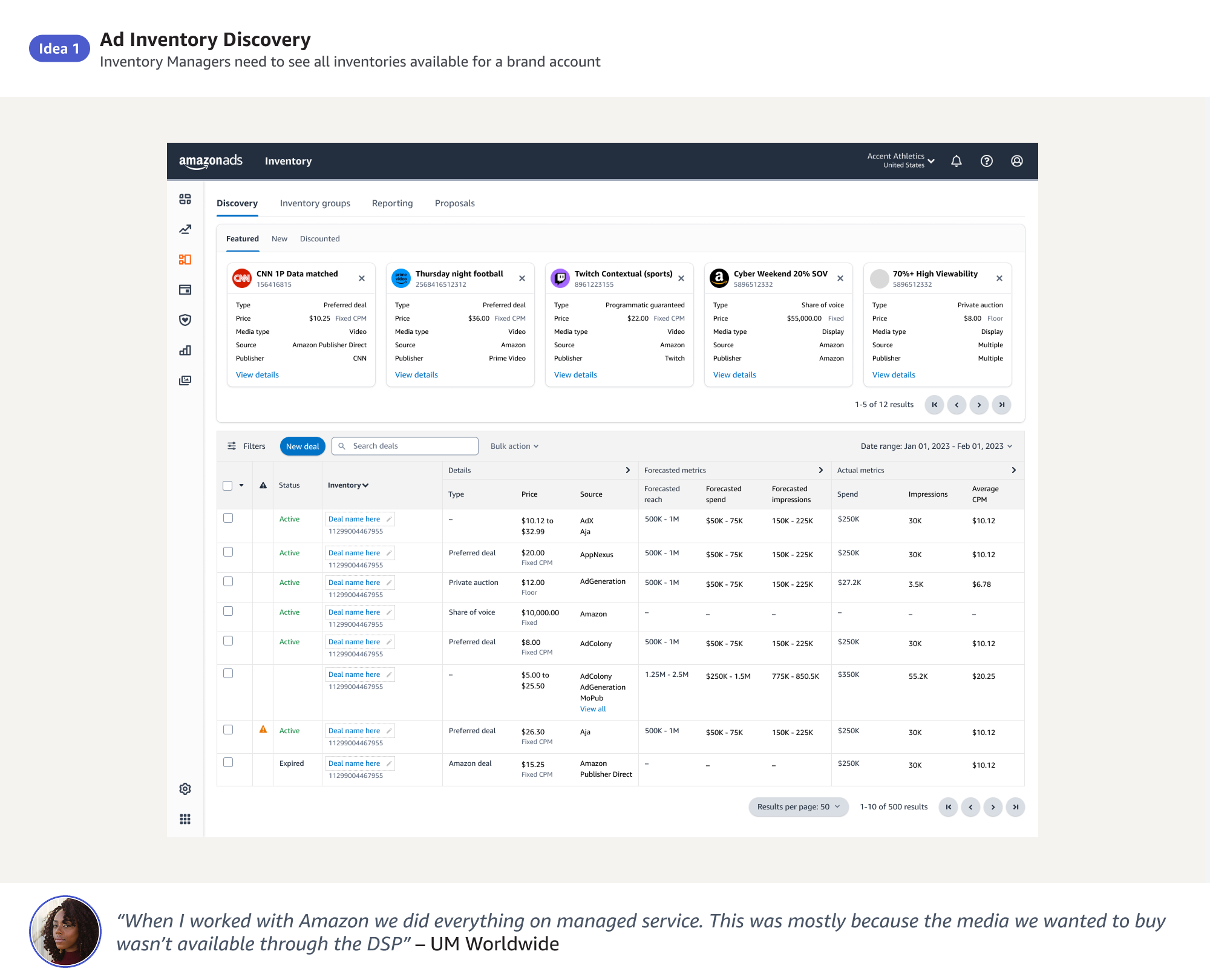
I designed a net new centralized inventory catalog within Amazon DSP to help ad buyers discover, browse, and compare available deals across multiple supply sources.
A table-based view with standardized metadata (pricing, supply source, reach etc.), allowing inventory managers to quickly scan and evaluate inventory at scale. By surfacing key decision-making signals and reducing reliance on external tools, this design streamlined inventory discovery and improved confidence in selecting the right deals.
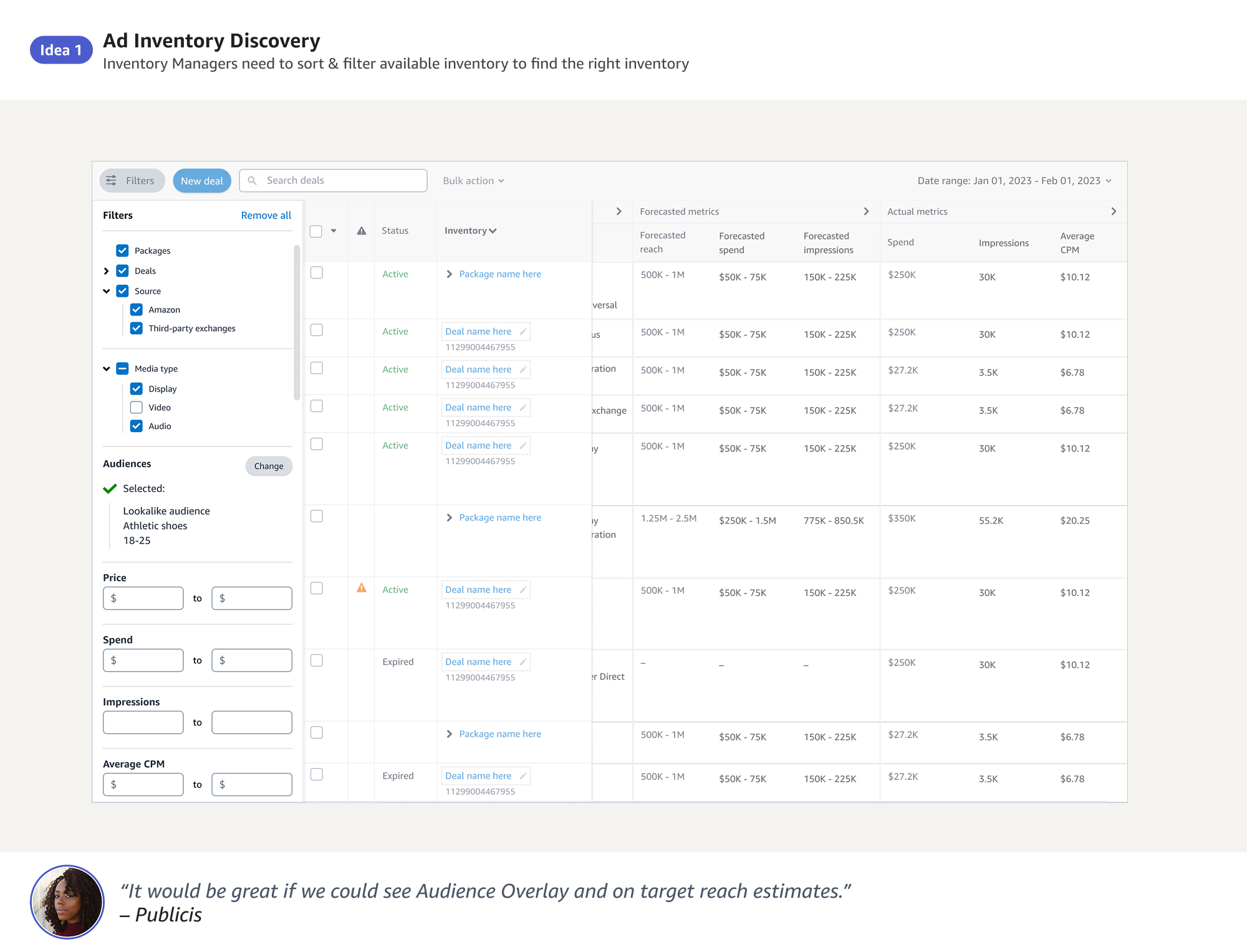
The new UX introduces advanced filtering, enabling users to refine inventory based on pricing, media, seller, spend, impression and audience affinity. By bringing audience signals directly into the discovery experience, this design shifts inventory selection from supply-driven to audience-driven decision-making, aligning with how buyers actually plan media spend. This also reduces burden on traders down the line to match audiences with inventory.
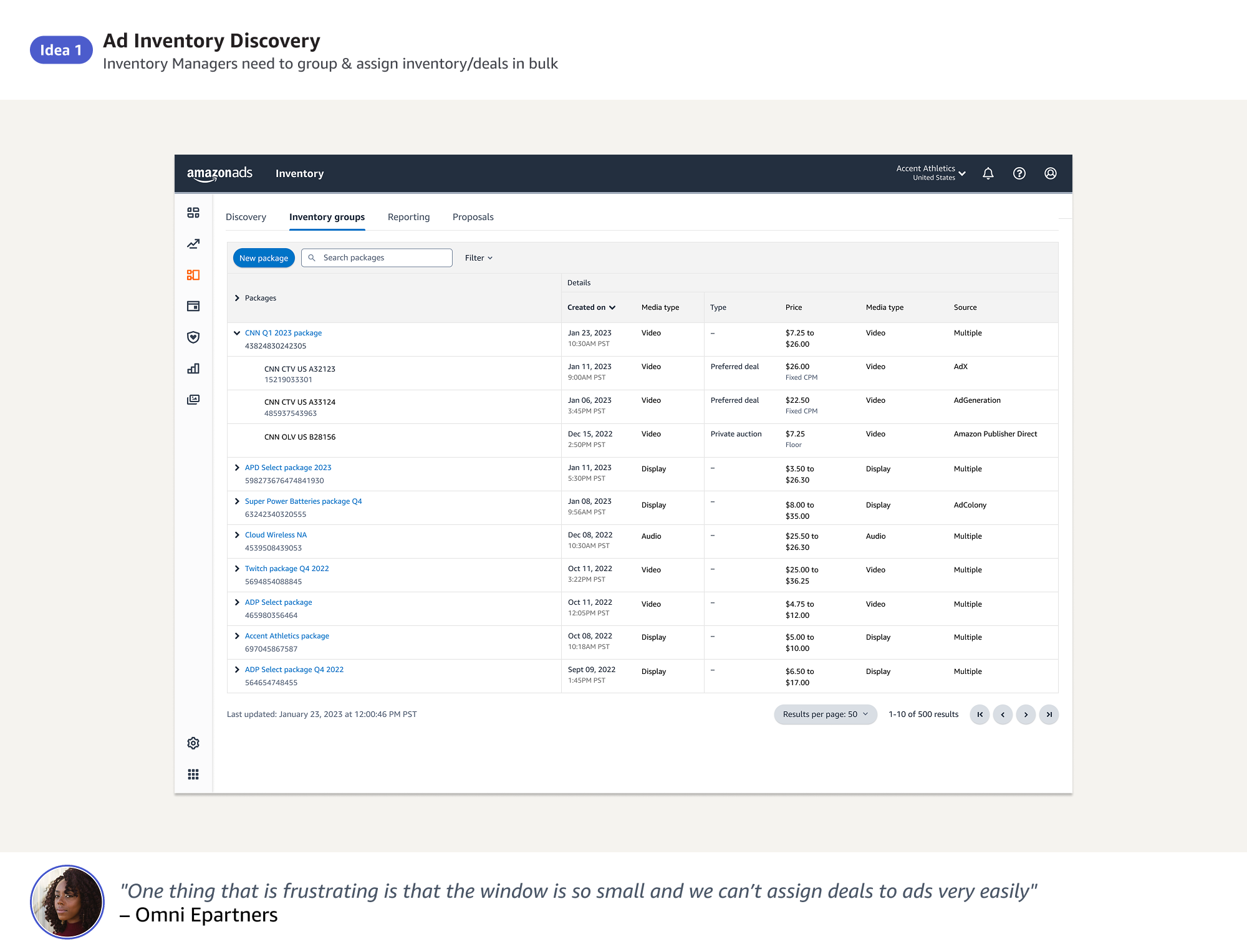
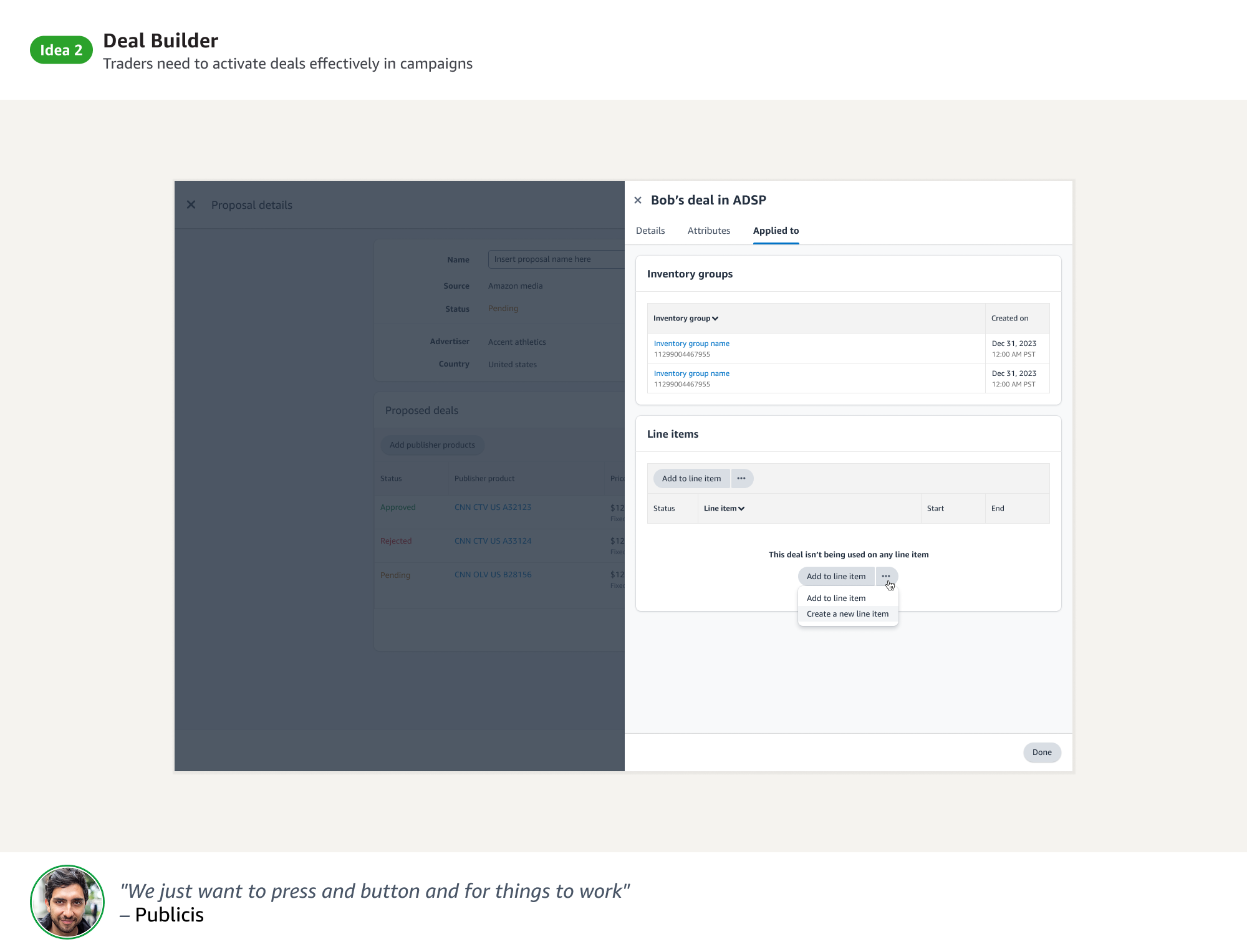
Introducing Inventory groups enable inventory managers to bundle related inventory (ex: by publisher, format, or campaign strategy) into reusable objects. This reduces repetitive manual work by enabling bulk actions and centralized organization of inventory. Since Inventory Groups are reusable between ad campaigns, inventory managers can quickly assign, update, and activate multiple deals, improving efficiency in high-volume campaign workflows.
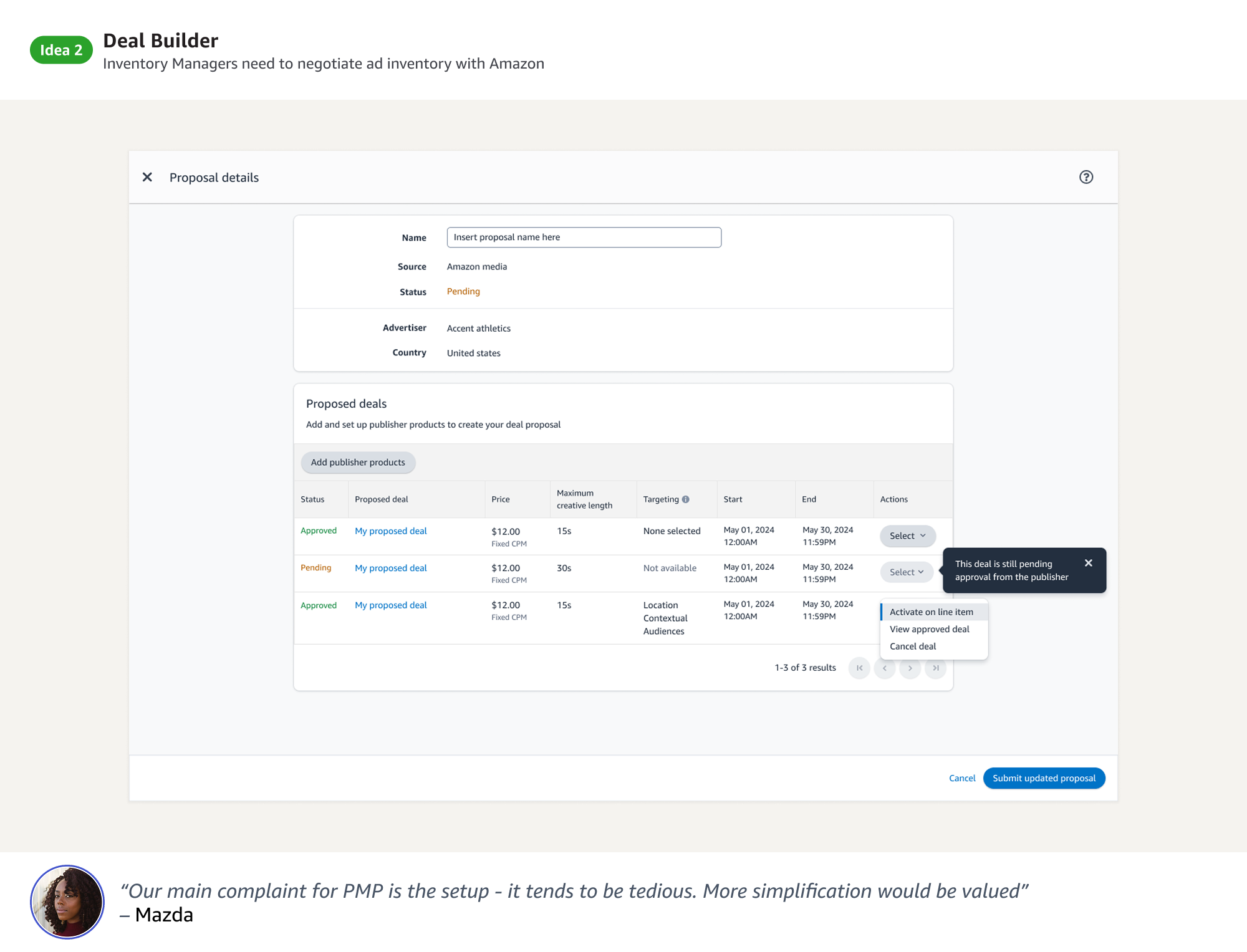
I designed a proposal-based system that allows buyers to create, track, and manage deals directly within the DSP. This brings negotiations into a structured UX where inventory managers can submit proposed deals, monitor approval status, and take action in real time, this simplifies a historically tedious and manual process.
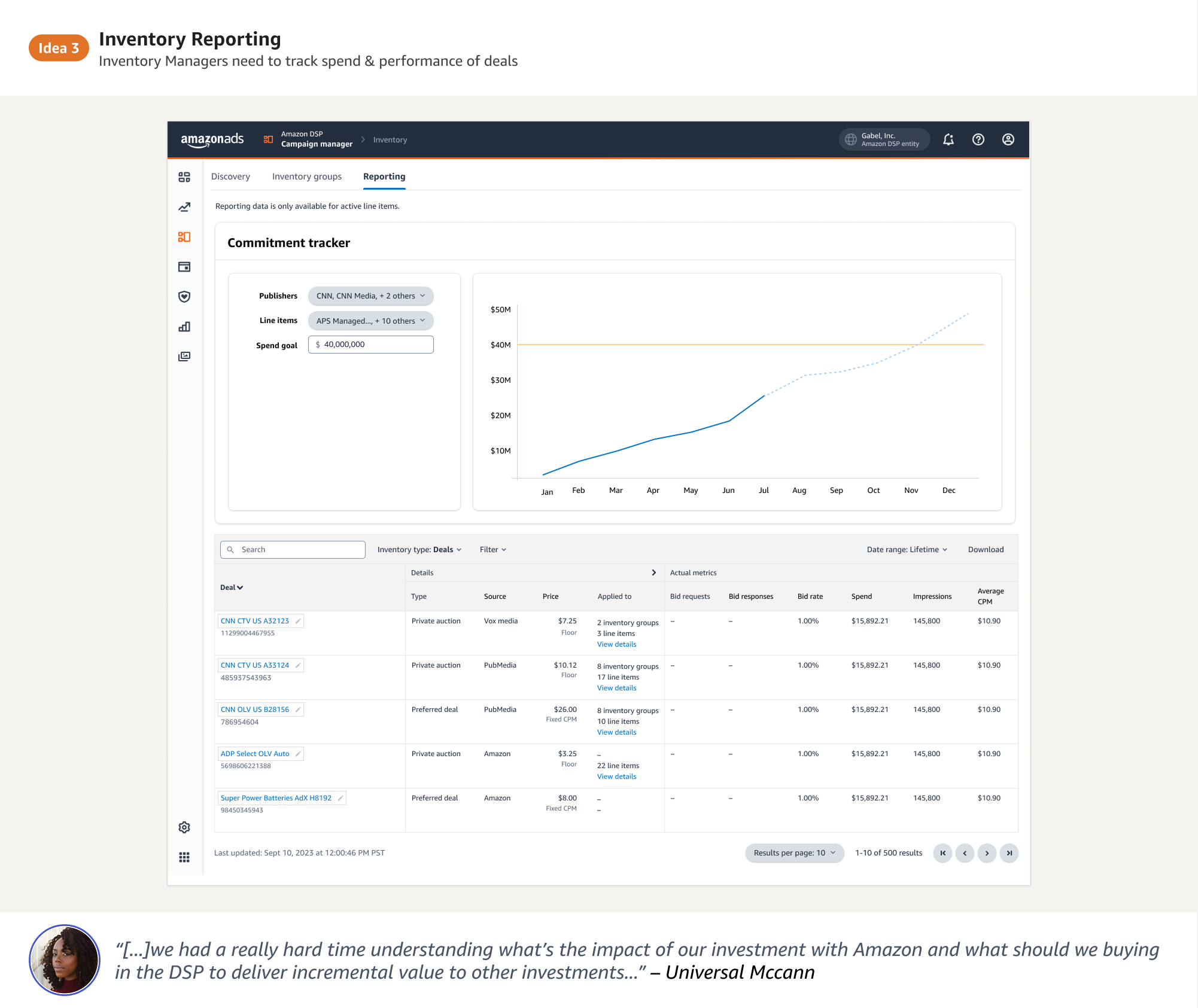
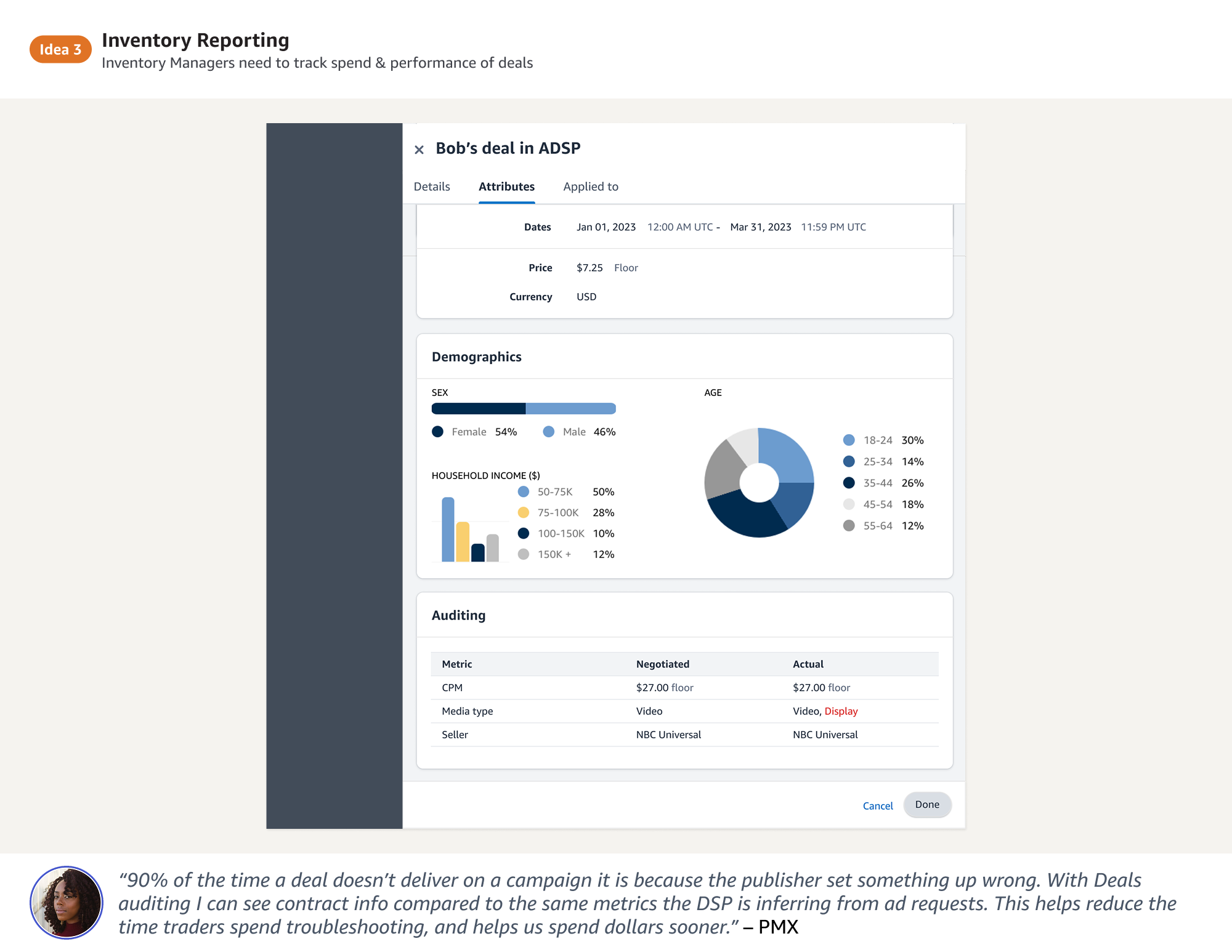
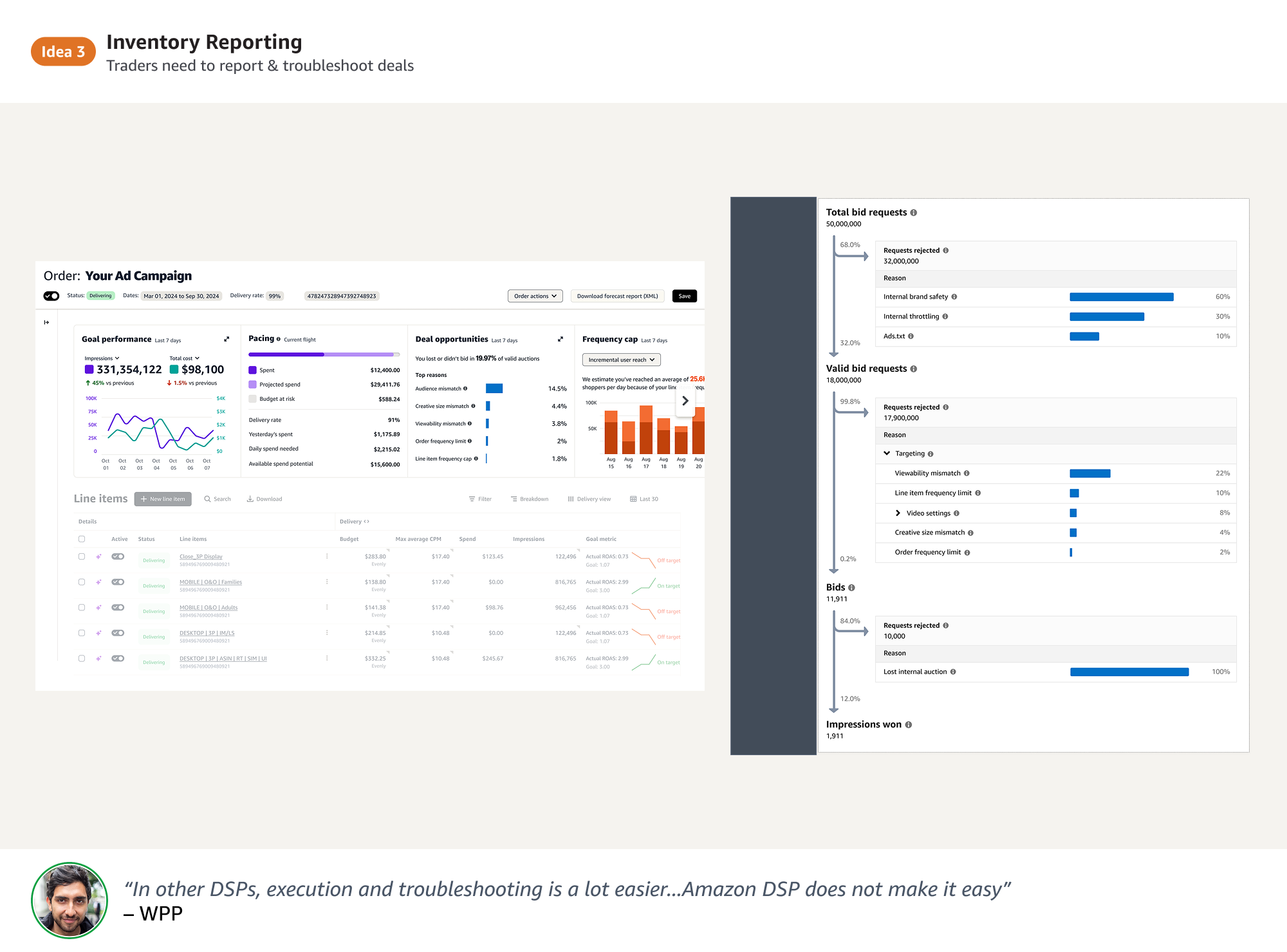
To support the full lifecycle of inventory buying, a reporting experience was designed that helps both inventory managers and traders understand performance, diagnose issues, and optimize deal execution.
While both roles rely on the same underlying data, their needs diverge: managers focus on investment performance and pacing, while traders need tools to troubleshoot delivery and improve execution. This experience bridges both perspectives through layered reporting—from high-level spend tracking to granular deal diagnostics.
Inventory hub connects discovery, deal negotiation, activation, and reporting into a singular streamlined experience.
By centralizing most of these workflows within Inventory Hub, it reduces fragmentation, streamlines management, and enables users to efficiently move from inventory exploration to campaign execution and optimization.
Previously, these workflows were either non-existent or fragmented across multiple tools requiring manual coordination and slowing down campaign execution